Constipation is a common digestive problem that can make you feel uncomfortable, bloated, or heavy. It usually means having bowel movements less often than usual or passing stools that are hard, dry, or difficult to pass.
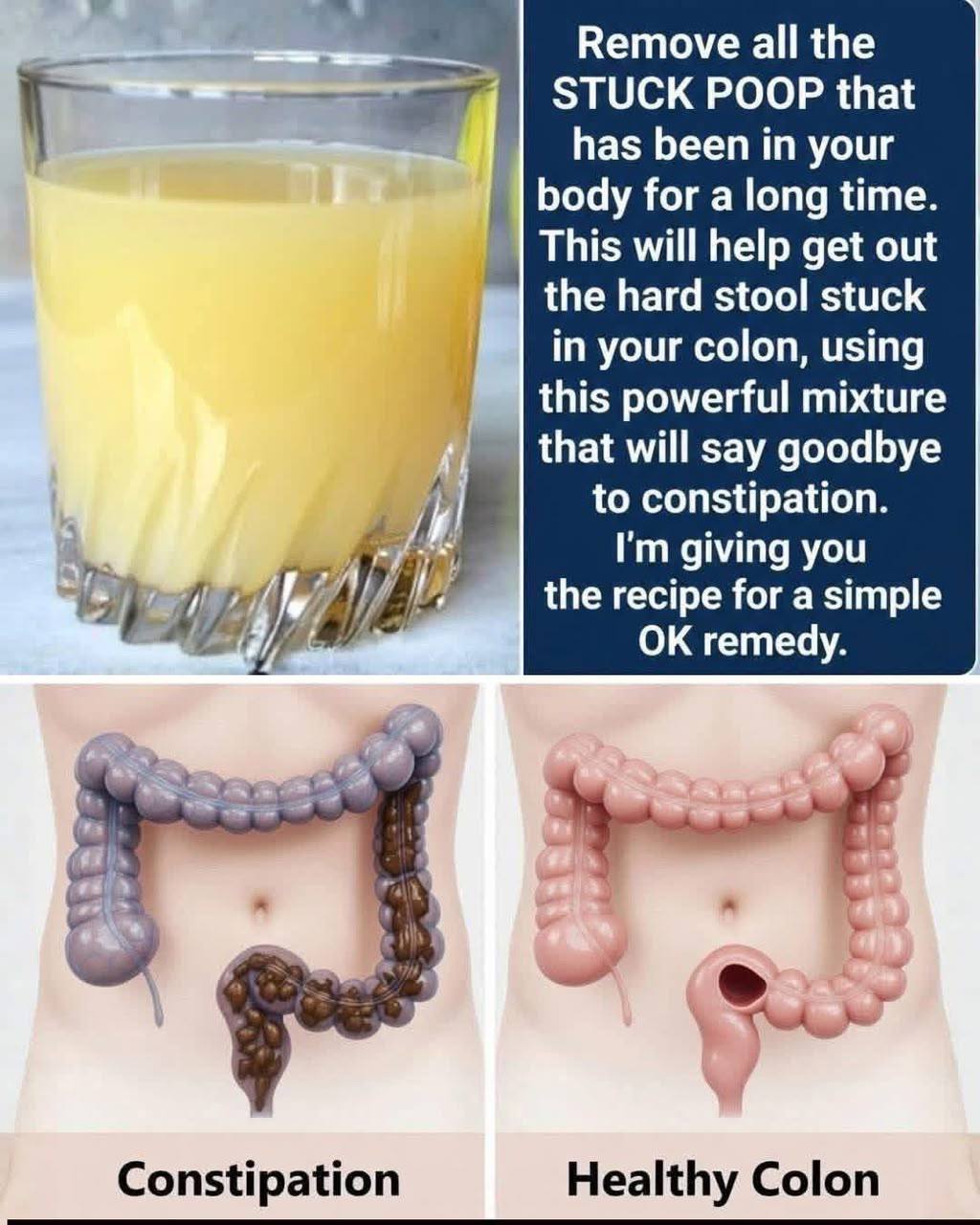
The image associated with this topic makes a strong claim about removing “stuck poop” from the colon and completely cleansing the digestive system. However, the body does not normally store large amounts of old stool that need to be “flushed out” by a special drink. The digestive system naturally moves waste through the intestines and eventually eliminates it.
Still, there are simple habits and food choices that can help support regular bowel movements. Drinking enough fluids, eating enough fiber, staying physically active, and paying attention to your bathroom routine are among the most useful approaches.
What Is Constipation?
Constipation happens when bowel movements become difficult or less frequent than normal.
Some people may have constipation when their stools become unusually hard or dry. Others may feel that they need to strain or that they have not completely emptied their bowels.
Common symptoms can include:
- Hard or dry stools
- Difficulty passing stool
- Straining during bowel movements
- Feeling bloated
- Abdominal discomfort
- Feeling that the bowel has not completely emptied
- Going to the bathroom less often than usual
Everyone’s normal bowel pattern is different, so there is no single number of bowel movements that is considered normal for everyone.
Does Stool Stay in the Colon for Years?
This is one of the most misleading ideas found in many viral health posts.
The colon does contain stool before it is eliminated, but there is no scientific basis for the idea that large amounts of old fecal matter normally remain stuck inside the colon for years.
The digestive tract is continuously moving its contents forward. The colon absorbs water and helps form stool, which is eventually passed from the body.
When constipation occurs, stool can remain in the colon longer than usual and become harder. That does not mean the body needs a special detox drink to remove years of accumulated waste.
What Can Cause Constipation?
Constipation can happen for many different reasons.
One common cause is not getting enough dietary fiber. Fiber helps add bulk to stool and can help support regular bowel movements.
Not drinking enough fluids can also contribute, particularly when the diet contains a lot of fiber but not enough liquid.
Other possible factors include:
- Not being physically active
- Ignoring the urge to use the bathroom
- Sudden changes in diet
- Traveling or changes in routine
- Certain medications
- Some medical conditions
- Changes in eating habits
Sometimes constipation happens temporarily and resolves when the underlying cause is addressed.
The Importance of Water
Water plays an important role in normal digestion.
The colon absorbs water from digestive contents, and hydration can help prevent stools from becoming excessively dry.
A simple glass of water can therefore be a useful part of a healthy daily routine.
However, drinking enormous quantities of water does not “wash” the colon clean. The goal is simply to maintain normal hydration according to your body’s needs.
If you are physically active, live in a hot climate, or lose fluids through sweating, your fluid needs may be higher.
Fiber and Healthy Digestion
One of the most important dietary factors for regular bowel movements is fiber.
Fiber is found naturally in many plant foods, including fruits, vegetables, legumes, whole grains, nuts, and seeds.
There are different types of fiber, and they can affect digestion in different ways.
Some fibers add bulk to stool, while others absorb water and form a softer texture.
Good sources of dietary fiber include:
- Oats
- Beans
- Lentils
- Chickpeas
- Apples
- Pears
- Oranges
- Vegetables
- Whole-grain bread
- Brown rice
- Nuts and seeds
When increasing fiber, it is generally better to do so gradually and drink enough fluids.
A sudden large increase in fiber can cause temporary gas or bloating in some people.
A Simple Drink for a Healthy Routine
There is no magical drink that removes years of waste from the colon. However, a simple homemade drink can be part of a healthy routine.
One easy option is warm water.
Ingredients
- 1 cup of warm water
- A squeeze of fresh lemon, optional
Preparation
Warm the water until it is comfortable to drink.
Add a small amount of fresh lemon juice if you enjoy the flavor.
Drink it slowly.
The benefit is not that the drink “detoxes” the colon. Rather, it can contribute to your daily fluid intake and may be a pleasant way to start the day.
What About Lemon Water?
Lemon water is popular as a morning drink, but it is sometimes described online as a powerful detoxifying treatment.
There is no need to make such a claim.
Lemon provides flavor and contains vitamin C, while the water contributes to hydration. For most people, the drink can simply be enjoyed as an alternative to plain water.
It does not dissolve years of accumulated stool or physically clean the inside of the colon.
Foods That Can Support Regularity
Instead of looking for a single powerful drink, consider the overall diet.
A meal containing vegetables, legumes, whole grains, and fruit can provide considerably more fiber than a diet based mainly on refined foods.
For example, breakfast could include oats with fruit and nuts. Lunch might contain lentils or beans with vegetables. Fruit can be used as a snack instead of highly processed foods.
These small choices can make a difference over time.
Prunes and Other Fruits
Certain fruits are traditionally associated with digestive regularity.
Prunes, for example, contain fiber and naturally occurring sorbitol, a carbohydrate that can have a stool-softening effect for some people.
Other fruits can also contribute fiber and fluids to the diet.
Pears, apples, berries, oranges, and kiwifruit are examples of fruits that can be included in a varied diet.
The important point is that no single fruit needs to be treated as a miracle remedy.
Physical Activity and Digestion
Movement can also be helpful for maintaining regular bowel habits.
Walking, cycling, stretching, and other forms of regular physical activity can support general digestive function.
You do not necessarily need an intense workout.
Even incorporating more movement into your daily routine can be useful. A short walk after a meal, for example, can be an easy habit to maintain.
Do Not Ignore the Urge
Another simple habit is responding to the body’s natural urge to have a bowel movement.
Repeatedly ignoring the urge can make establishing a regular bathroom routine more difficult.
Try to give yourself enough time rather than rushing.
A comfortable position can also make bowel movements easier. Some people find that placing their feet on a small footstool while sitting on the toilet helps create a more natural position.
What About “Colon Cleansing”?
Colon cleansing products, detox drinks, and extreme cleansing routines are often advertised online.
The idea is usually that waste supposedly builds up inside the colon and must be removed.
For most healthy people, this is unnecessary. The digestive system already has its own process for moving and eliminating waste.
Aggressive cleansing methods can also cause problems, especially if they result in dehydration or electrolyte disturbances.
A healthy digestive system does not need to be repeatedly “reset” with special detox programs.
When Constipation Needs Medical Attention
Occasional constipation is common, but persistent or severe symptoms should not simply be treated with homemade remedies.
You should seek medical advice if constipation continues or keeps returning despite reasonable lifestyle changes.
It is particularly important to get medical attention if constipation is accompanied by symptoms such as significant abdominal pain, vomiting, blood in the stool, unexplained weight loss, or a major and unexplained change in bowel habits.
These symptoms can have causes that require proper evaluation.
Be Careful With Laxatives
Some people turn immediately to laxatives when they become constipated.
Laxatives can be appropriate in certain situations, but the choice of product matters. Different types work in different ways, and frequent or inappropriate use can cause problems.
If constipation is persistent, asking a pharmacist or healthcare professional for advice is a better approach than repeatedly trying different products.
A healthcare professional can also help determine whether another medication or medical condition may be contributing to the problem.
A Healthy Colon Does Not Need a Detox
The “before and after” colon images commonly used in viral posts can make it appear as though a special drink physically transforms the intestine.
These illustrations are not reliable representations of what happens after drinking a homemade mixture.
A healthy colon is part of a functioning digestive system. It naturally receives digestive material, absorbs water and certain substances, houses a large community of microorganisms, and eventually passes waste out of the body.
The goal should be to support normal digestive function rather than constantly trying to cleanse it.
Simple Habits for Better Digestion
A few consistent habits can be more useful than a complicated recipe.
Try to:
- Drink fluids regularly.
- Include fiber-rich foods in your meals.
- Eat a variety of fruits and vegetables.
- Stay physically active.
- Avoid regularly ignoring the urge to use the bathroom.
- Increase fiber gradually if your current intake is low.
- Pay attention to persistent changes in your digestion.
These habits support overall digestive health and can be easier to maintain than short-term detox routines.
Final Thoughts
Constipation can be uncomfortable, but the solution does not usually involve removing years of “stuck poop” from the body.
The colon naturally moves stool through the digestive system, and there is no need for a special drink to cleanse it in the way viral images often suggest.
A simple drink such as warm water with a little lemon can be enjoyable and can contribute to hydration, but it should not be presented as a powerful colon-cleaning treatment.
For better regularity, focus on the basics: enough fluids, fiber-rich foods, regular movement, and healthy bathroom habits.
If constipation is severe, persistent, or accompanied by concerning symptoms, professional medical advice is the safest choice.